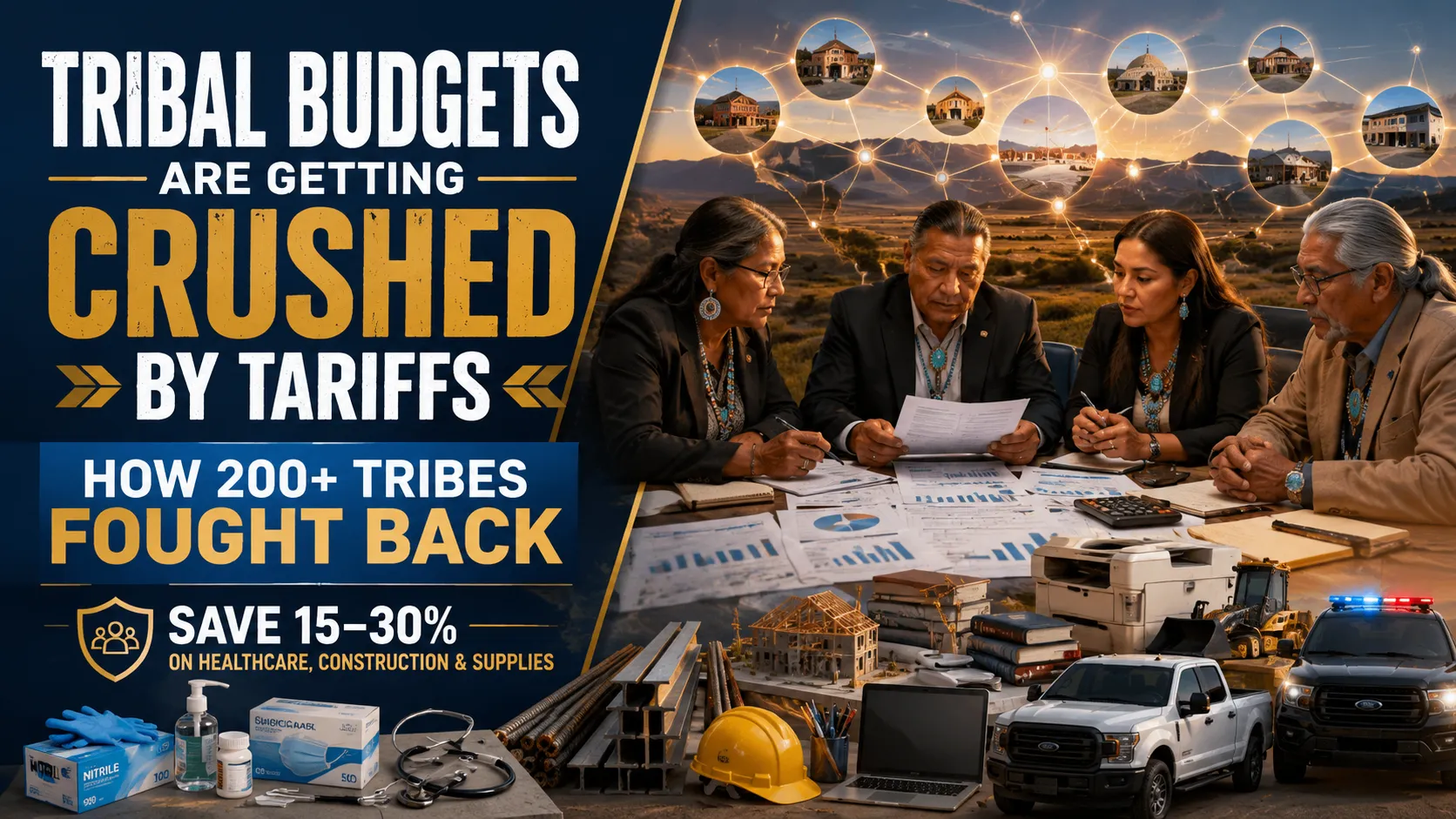
Tribal Budgets Are Getting Crushed by Tariffs. Here’s How 200+ Tribes Fought Back
Tariffs are spiking costs for Tribal Nations in 2026. Learn how 200+ tribes are using collective buying power to save 15-30% on healthcare, construction, and supplies, without new staff or RFPs.
If you run procurement for a Tribal Nation right now, you don’t need another report to tell you what you already feel in your budget meetings. Medical gloves that were $8 a box last year are $11. A school bus part is on backorder with a 22% tariff surcharge. Your construction bid came back $140,000 over.
This is not inflation as usual. This is the tariff squeeze of 2026, and it hits Tribal governments harder because you buy alone.
That is why more than 200 Tribal Nations have stopped negotiating solo. They joined the only 100% Native Owned group purchasing organization dedicated to serving Tribal Organizations exclusively, Native Purchasing Group. They are not cutting services. They are changing the math.
The 2026 Reality: Why Tariffs Hurt Tribes First
Most federal and state agencies get price protection clauses. Large hospital systems get national GPO contracts. Tribes often do not. When you issue a single-tribe RFP for $80,000 in janitorial supplies, you get retail-plus pricing.
Vendors know it. In 2025-2026, tariffs on steel, aluminum, medical devices, and imported electronics pushed base costs up 12-19%. Vendors passed it straight through to small buyers.
The result? Tribal finance directors are being forced to choose between delaying a housing project or cutting elder nutrition funding. That is not sovereignty. That is survival mode.
The Real Problem Is Not Tariffs. It Is Buying Power.
For decades, Tribal procurement has been built on independence. Independence is a value, but in purchasing, independence means zero leverage.
Native Purchasing Group was built to fix exactly this. It is a GPO that helps Tribal organizations reduce costs through negotiated contracts across multiple industries. Instead of one tribe asking for a discount, 200+ tribes buy together. Vendors compete for that volume.
How big is that volume? Members get access to more than 3,400 vendors and about 4 million products, from healthcare and office supplies to hospitality, food service and construction materials.
And yes, the Seminole Tribe joining pushed membership past 200, proof that large, sophisticated Nations see the value.
How 200+ Tribes Actually “Fought Back”
They did not hire new procurement staff. They did not change their sovereignty. They did three things:
- They kept their vendors, but changed the price.
Members order directly from vendors using an assigned customer number that unlocks negotiated pricing. Same trusted supplier, new contract tier. - They made membership free.
This is critical. Membership is free for tribes. Vendors pay NPG an administrative fee on each purchase. That means there is no budget line item, no Council approval for a subscription, no risk. - They used a Native-owned partner that understands federal preference compliance.
NPG is an SBA SDB, Certified Minority Business Enterprise and IEE-certified. That matters when you need to document Native preference and keep dollars circulating in Tribal communities.
Where The Savings Show Up First
Tariffs are broad, but savings are specific. Here is where Tribal members are seeing relief right now:
1. Healthcare and Pharmacy
Healthcare remains a key focus because pharma and medical supply costs are rising fastest. One Southwest tribal clinic switched its prime vendor to an NPG contract and saved 22% on PPE and diagnostics in Q1, without changing clinical preference cards. That is money that went straight back to behavioral health staffing.
2. Education
School districts feel tariffs on laptops, cafeteria food, and cleaning supplies. With Tribal Education Purchasing, tribes are pooling textbook, food service, and classroom technology buys. A Northern Plains tribe fed 30% more students on the same USDA reimbursement by moving food to a cooperative contract.
3. Office Technology
Printers, copiers, Microsoft licensing, cybersecurity, all hit with import tariffs. The Tribal Office Technology Contracts give you pre-negotiated pricing that normally only state governments get. No three-bid process, no six-month RFP.
4. Fleet and Public Works
This is where tariffs bite hardest. Steel, tires, parts. Through Tribal Fleet Purchasing, members are getting national fleet pricing on vehicles, heavy equipment, and maintenance. One Oklahoma Nation delayed a road project in 2024. In 2025 they bought through the GPO and came in 18% under estimate.
5. Infrastructure and Public Safety
From emergency response tools to engineering services, NPG contracts cover categories that most tribal procurement teams do not have time to bid properly. You leverage the collective group buying power instead of starting from zero.
The Math Tribal Councils Actually Care About
Council meetings focus on what matters most: protecting services for your people.
Here’s a straightforward model many of our members use:
If your tribe spends $2M annually on supplies, equipment, and services covered in the NPG portfolio, and the average contract saves 14%, that’s $280,000 returned to your budget.
No new staff. No membership fee. No change in sovereignty. Just a customer number.
That $280,000 can fund a full-time nurse. It can cover roof repairs for 12 elders. It can support a language immersion teacher for a year.
This is why many leaders see this as more than a purchasing decision. It’s a governance decision that helps protect essential services.
“But We Already Have Good Vendor Relationships”
Perfect. Keep them. NPG is not a distributor. You still order direct. If your current vendor is already in the 3,400+ network, you just get the better price tier. If they are not, you have leverage to ask them to join, or you switch for that category only.
This is why 200+ tribes joined so fast. There is no disruption, only upside.
FAQ: What Tribal Leaders Ask Before Joining
Is this really free for tribes?
Yes. Membership is free. Vendors fund the model through an admin fee. Reference
Do we lose control of procurement?
No. You keep your process, your approvals, your sovereignty. You just get access to better contracts.
How long does it take to start saving?
Most tribes are active in 48 hours. You get your member number, log in, and start ordering.
Does this work for small tribes?
Especially for small tribes. A 400-member Nation gets the same pricing as the largest Nations because you are buying together.
What about federal preference and Native compliance?
NPG is 100% Native Owned and IEE-certified, so using the contracts supports your compliance goals.
Your Budget Is Not Going to Fix Itself
Tariffs will not disappear in 2026. Vendors will not suddenly offer you a discount out of respect. The only variable you control is leverage.
200+ Tribal Nations already made the shift. They stopped asking “how do we cut” and started asking “how do we buy smarter.”
If you want to see exactly what your tribe is overpaying for right now, Native Purchasing Group will run a free savings analysis on your last 12 months of spend. No pitch, just numbers.
Ready to fight back?
Start here: Contact Native Purchasing Group
Or learn more about the model at nativepurchasing.com.
Your community deserves every dollar to work as hard as you do. Let’s make sure it does.